
Unlocking Competitive Edge through Green Hydrogen: The Next Frontier in Renewable Integration
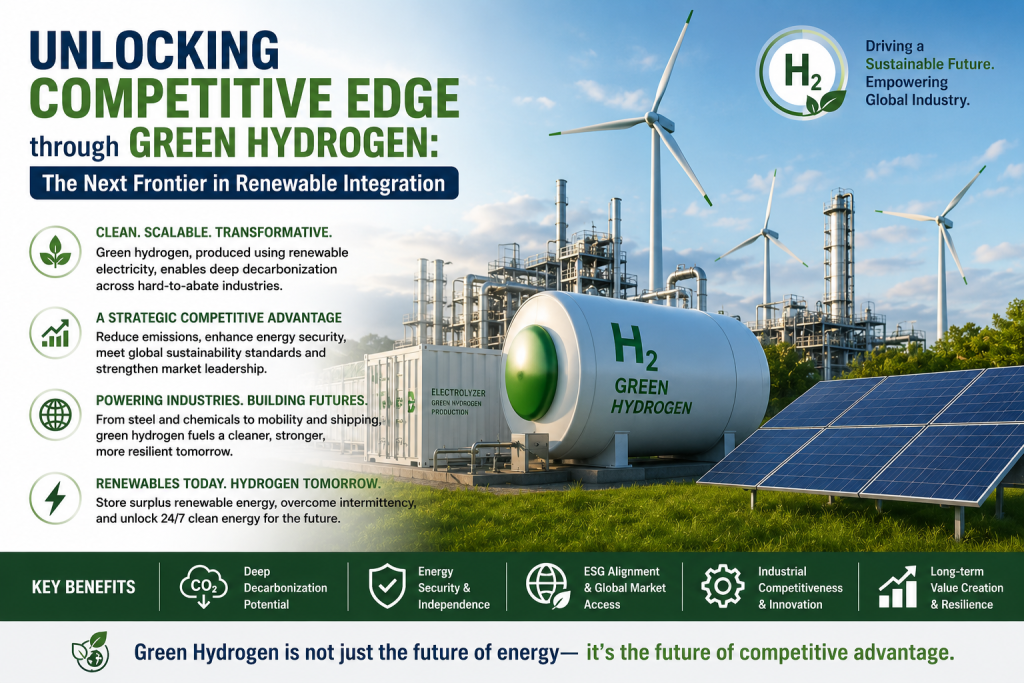
As industries worldwide race toward net-zero targets, green hydrogen is rapidly emerging as one of the most transformative solutions in the clean energy transition. Produced using renewable electricity through electrolysis, green hydrogen offers industries an opportunity to decarbonize sectors where direct electrification remains difficult, including steel, chemicals, fertilizers, refining, and heavy transport.
What once seemed like a futuristic energy concept is now becoming a strategic business imperative. Countries and corporations are investing billions into hydrogen ecosystems as renewable energy costs continue to decline and climate regulations tighten globally. According to the International Energy Agency, global electrolyzer capacity announcements have expanded dramatically in recent years, signaling strong momentum for large-scale adoption.
For industries, green hydrogen represents more than an environmental initiative—it is increasingly becoming a source of competitive advantage. Companies integrating hydrogen into operations can reduce carbon-intensive fuel dependence, strengthen energy security, and align with global supply chain sustainability expectations. As carbon border taxes and ESG disclosure frameworks expand, low-carbon manufacturing is expected to become a key differentiator in international trade.
India is positioning itself as a major player in this transition through the National Green Hydrogen Mission, which targets large-scale domestic production and export potential. With abundant solar and wind resources, the country has a unique opportunity to combine renewable energy integration with hydrogen production, creating a cleaner industrial ecosystem while reducing fossil fuel imports.
The integration of renewable energy with green hydrogen also addresses one of renewable power’s biggest challenges—intermittency. Excess solar and wind energy generated during peak periods can be converted into hydrogen and stored for future use, enabling greater grid flexibility and long-term energy resilience. This creates a powerful synergy between renewable expansion and industrial decarbonization.
Leading companies across sectors are already exploring hydrogen-powered manufacturing, green ammonia production, and hydrogen-based mobility solutions. Early adopters are likely to benefit from technology leadership, investor confidence, policy incentives, and access to emerging green markets.
However, scaling green hydrogen will require continued investments in electrolyzer manufacturing, infrastructure development, storage systems, and supportive policy frameworks. Cost competitiveness remains a challenge today, but rapidly falling renewable energy prices and technological advancements are expected to narrow the gap over the coming decade.
The next phase of industrial transformation will not be driven solely by renewable electricity generation, but by how effectively industries integrate renewable energy into entire value chains. Green hydrogen has the potential to redefine manufacturing competitiveness, energy systems, and global trade dynamics simultaneously.
As the world moves toward a low-carbon economy, businesses that embrace green hydrogen early may not only reduce emissions but also secure a decisive advantage in the industries of tomorrow.