
Motherson Advances Industrial Decarbonization with Its Inaugural Captive Solar Facility in Uttar Pradesh
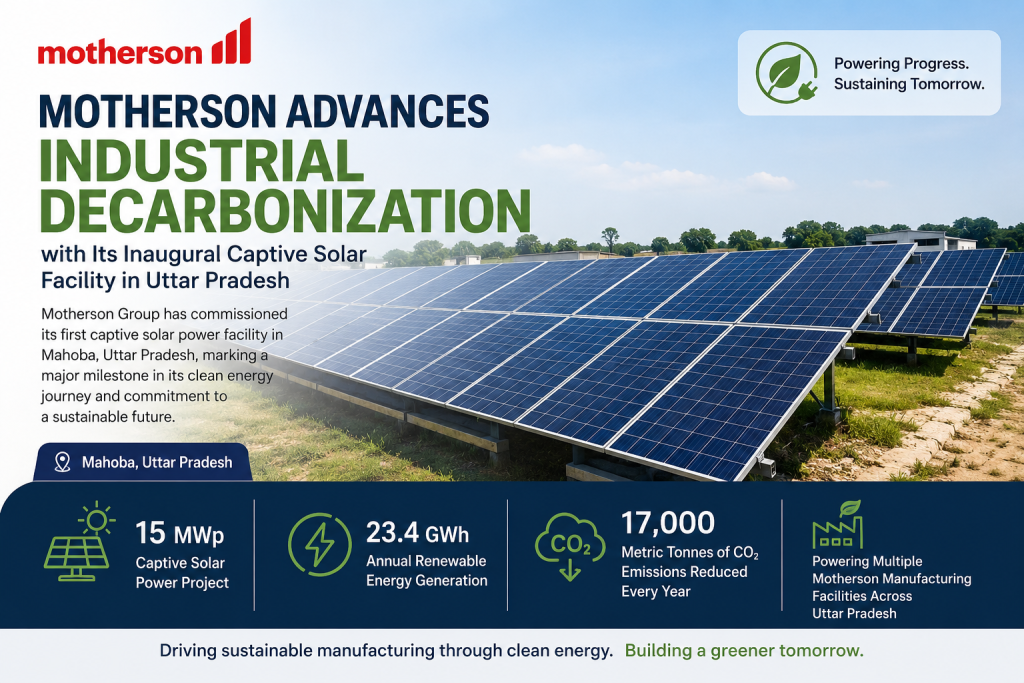
India’s manufacturing sector is steadily entering a new era where competitiveness and sustainability are becoming inseparable. In a significant move toward industrial decarbonization, Motherson Group has commissioned its first captive solar power facility in Uttar Pradesh, reinforcing the growing role of renewable energy in industrial operations.
The newly inaugurated 15 MWp ground-mounted solar project, located in Mahoba district, will supply renewable electricity to multiple Motherson manufacturing facilities across Uttar Pradesh under a group captive arrangement. Developed through Motherson New Energy Limited (MNEL) and its subsidiary Onega Solar Private Limited, the project marks a major milestone in the company’s clean energy transition strategy.
The plant is expected to generate nearly 23.4 GWh of renewable electricity annually while reducing approximately 17,000 metric tonnes of carbon dioxide emissions every year. These numbers highlight the scale at which industrial renewable energy projects can contribute to India’s broader climate commitments and net-zero ambitions.
Captive renewable energy projects are becoming increasingly important for industries facing rising energy costs, supply chain sustainability requirements, and pressure from global customers to reduce embedded carbon emissions. Automotive and manufacturing companies, in particular, are under growing scrutiny to decarbonize not just products but also production processes. Motherson’s investment demonstrates how renewable energy is moving from a compliance initiative to a strategic business decision.
The project also reflects a wider transformation within India’s industrial ecosystem. States such as Uttar Pradesh are witnessing increasing deployment of captive and group captive solar installations as industries seek greater energy resilience and long-term cost stability. By directly integrating solar energy into manufacturing operations, companies can reduce dependence on conventional grid electricity while improving operational sustainability.
Motherson’s renewable energy push aligns with a broader trend among Indian manufacturers that are embedding sustainability into core business strategy. The initiative sends a strong signal that industrial growth and climate responsibility can progress together rather than in opposition.
As India accelerates its clean energy transition, projects like Motherson’s Mahoba solar facility illustrate how corporate leadership, renewable infrastructure, and industrial decarbonization are becoming deeply interconnected. The future of manufacturing will not only be defined by production capacity and innovation, but also by how effectively industries transition toward low-carbon operations.